biography
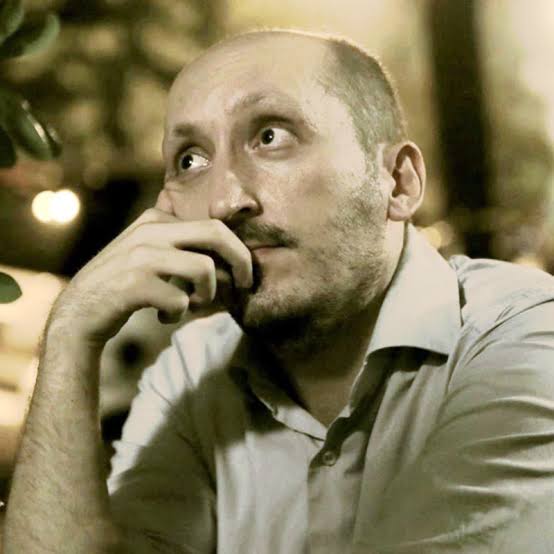
Claudio Casazza is a director, writer, and multidisciplinary artist working across documentary cinema, dramaturgy, and participatory artistic practices. His research explores the relationship between the individual and the collective, investigating what tends to remain off-screen: invisible labour, practices of care, marginal memories, masculine identities, and everyday forms of resistance.
He graduated in Film Directing from the Luchino Visconti School of Cinema in Milan (2007), following a degree in Political Science - International Relations from the University of Milan (2002). His artistic practice has developed at the intersection of cinema, social research, and community-based practices.
He has directed documentaries, fiction short films, and hybrid works that have been presented and awarded at national and international festivals. His most significant works include HABITAT [PIAVOLI] (2013), an essay film dedicated to filmmaker Franco Piavoli and the relationship between microcosm and universe; Capulcu – Voices from Gezi Park (2014), a documentary about the Turkish social movement; Un altro me (2016), a research into gaze and sexuality developed through an encounter with a group of prisoners; L'ultima Popstar (2017), a work about absence and collective anticipation; Le storie che saremo (2020), an archival documentary about memory; and Cicciolina Pocket (2022), a fiction short film exploring the relationship between personal memory and adolescence.
In recent years, he has expanded his research into theatre and dramaturgy, developing processes based on listening, collective creation, and community engagement. He is the author of several texts for the project Le storie che non raccontiamo (The stories that we don't tell - Teatri Possibili, 2025 - ongoing). He has led workshops in schools, prisons, and at festivals, using documentary and theatrical tools to construct shared narratives with diverse groups.
He was curator of the Milan edition of the European Parliament’s LUX Prize (2015-2019) and contributes to film and theatre criticism magazines, including Cinequanon and Stratagemmi Prospettive Teatrali. He has also collaborated with film and theatre festivals. His practice today moves between cinema, theatre, and social research, in search of artistic forms capable of making visible stories, bodies, and presences that are often marginalised.